Dubai Wedding Planning Timeline: A 12-Month Checklist From a Wedding Planner in Dubai
How Long Does It Actually Take to Plan a Wedding in Dubai?
Ten to twelve months is the working standard for a full-scale Dubai wedding. That figure is not arbitrary — it is set by the two constraints that are hardest to move: venue availability during peak season, and the lead time serious vendors need to hold a date without a deposit.
Shorter timelines are possible. We have delivered weddings on eight-week runways. What compresses is choice, not quality: you inherit whatever venue, date and supplier availability remains rather than selecting from the full market. If your date is flexible and your guest count is under 80, a six-month plan is comfortable. If you want a specific ballroom on a Saturday in November, start fourteen months out.
The other variable is format. A single-day reception and a four-function Indian wedding are entirely different production problems. If you are planning multiple ceremonies, read our guide to multi-day weddings and how to keep them stress-free alongside this timeline.
One structural note before you start. Every milestone below assumes someone owns the critical path. If that is not a professional planner, it is you — and the timeline still applies. Our page on what a wedding event management company in Dubai does sets out where that ownership sits in practice.
12 to 10 Months Out: Budget, Guest List and Planner Selection
These three decisions are interdependent and must be made together. Guest count drives venue shortlist; venue shortlist drives budget; budget determines the guest count you can actually host. Attempting them in sequence produces a revision loop that costs weeks.
Set a total budget with a contingency line. Allocate 10 to 15 percent as contingency before you distribute the rest. This is not padding — it is what absorbs the guest count creep, the supplier substitution and the currency movement that occur on almost every wedding. For a breakdown of where the money goes in this market, see wedding planner cost in Dubai.
Build the guest list in tiers. Tier A is non-negotiable, Tier B is invited if capacity allows, Tier C is the evening-only or reception-only group. Tiered lists let you adjust to venue capacity without renegotiating relationships.
Appoint the planner. Twelve months out is the correct point, because the planner’s leverage is highest before any contracts are signed. Interview at least three. Compare scope of work, not headline fee — a low fee attached to a coordination-only scope is more expensive than a full-service fee once you price your own time. Our roundup of the best wedding planners in Dubai explains what separates full-service from day-of coordination.
9 to 7 Months Out: Venue, Date and Season Strategy
Dubai’s wedding calendar is climate-driven. The peak outdoor season runs roughly from October to April, when evening temperatures make garden, beachfront and rooftop settings viable. Demand concentrates in that window, and so does venue pricing.
The shoulder-season arbitrage. Late April, May and late September deliver materially better rates and far better venue availability than the November-to-February core. The trade-off is heat risk, which is manageable if your ceremony is indoors or after sunset. Couples who are flexible on month rather than flexible on venue tend to get the better outcome.
Summer weddings are not off the table. June to August pricing is the softest in the calendar, and Dubai’s indoor ballroom inventory is world class. The constraint is guest travel appetite, not venue capability.
Shortlist by format, then inspect. Beachfront, desert, ballroom, yacht and private villa each impose different logistics on catering, power, sound curfews and guest transport. Our guide to the best wedding venues in Dubai breaks these categories down.
Lock the date only when the venue contract is signed. Verbal holds expire. Save-the-dates go out the week the contract is countersigned, not before.
If your celebration is bringing guests in from overseas, the venue decision also becomes a hospitality decision. See destination wedding planners in Dubai for how room blocks and arrival logistics change the venue shortlist.
6 to 4 Months Out: Design, Catering, Entertainment and Photography
With the venue fixed, the creative brief becomes solvable. Design decisions made before a venue is confirmed are almost always redone.
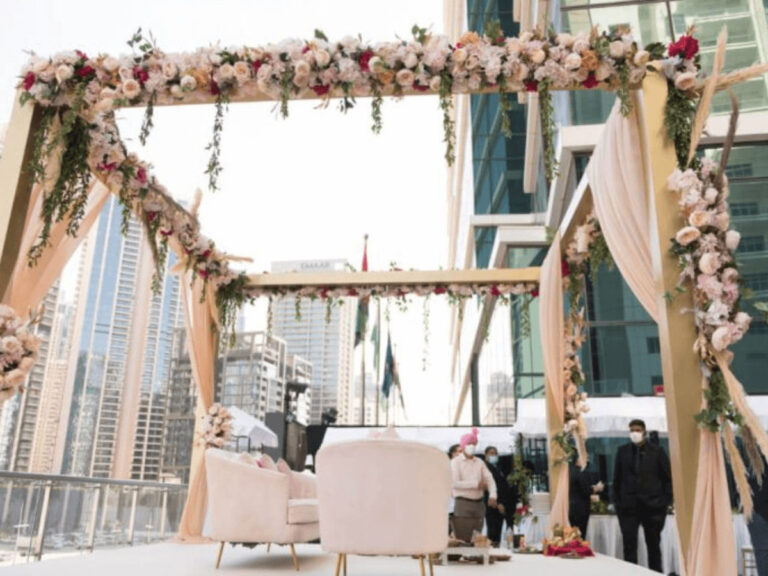
Lock the design direction. Palette, floral scheme, stationery, lighting design and stage or mandap build. Fabrication lead times for custom structures run six to ten weeks in this market, so the design must be signed off well before the build slot.
Complete the catering tasting. Menu confirmation, dietary matrix, service style — plated, family-style or stations — and bar package. Service style is a floor-plan decision as much as a food decision; it changes table spacing and staffing ratios.
Contract entertainment. Live band, DJ, dhol, choreographed segments, and any headline act. Headline talent is the single longest lead item on most weddings and should be secured earlier if it is central to the concept.
Book photography and film. Confirm deliverables explicitly: shot list, second shooter, drone permissions, edit turnaround and raw-file rights.
Confirm hair, makeup and styling. Book trials in this window, not later. A failed trial at eight weeks leaves no recovery time.
For couples planning Indian ceremonies, function-specific design and vendor requirements are covered in Indian wedding planners in Dubai.
3 to 2 Months Out: Invitations, RSVPs and Guest Logistics
This phase is administrative and unglamorous, and it is where most self-planned weddings lose control.
Send invitations at 10 to 12 weeks for a local guest list, and at 14 to 16 weeks where a meaningful share of guests are travelling internationally. Set the RSVP deadline four weeks before the wedding, not two.
Open the room block. Negotiate the hotel allocation and release date. Unclaimed rooms revert to the hotel on the release date, so the deadline you communicate to guests must sit ahead of it.
Build the transport plan. Guest shuttles, bridal party vehicles, vendor parking and load-in access. Venues with restricted service access need this mapped early.
Confirm every vendor contract in writing. Arrival time, load-in window, power requirement, meal provision, overtime rate and cancellation terms. Verbal agreements at this stage become disputes on the day.
Complete legal and documentation requirements. Marriage registration procedures in the UAE vary by nationality, religion and the authority conducting the ceremony. Verify current requirements directly with the relevant authority or your embassy — do not rely on secondhand accounts, as procedures change.
Several of the most costly errors cluster in this window. Our post on five common mistakes brides make on their wedding day covers the ones we see repeat.
1 Month to Wedding Week: Run Sheets, Rehearsals and Contingency
The final month converts a plan into a production document. If you take one thing from this timeline, take this: a wedding without a minute-by-minute run sheet is not planned, it is hoped for.
Build the master run sheet. Every vendor arrival, every load-in, every cue, every speech, every course, every music change — timed, with an owner named against each line. Distribute it to every supplier and to the venue operations manager. Our post on timeline planning for seamless events covers the mechanics.
Confirm final guest numbers to the venue. Catering guarantees typically lock 72 hours to seven days out depending on contract. Missing this deadline means paying for the higher number.
Run the rehearsal. Processional order, ceremony choreography, sound check and, for multi-function weddings, a walkthrough of every transition.
Write the contingency plan. Wet-weather call time and the indoor alternative, vendor no-show substitutes, power redundancy, and a named single point of contact for the day. The wet-weather decision needs a defined deadline — typically four to six hours before doors — and one named person authorised to make it.
Settle final payments and prepare cash gratuities in labelled envelopes, handed to one delegated person on the day.
The Wedding Day Production Timeline
On the day itself, the couple should have no operational responsibilities. That transfer of responsibility is the entire value of the preceding twelve months.
A typical evening reception in Dubai runs on this shape, adjusted for sunset and for your ceremony format:
Morning: hair and makeup call, getting-ready coverage, vendor load-in begins, floral and décor install.
Midday: venue setup complete, lighting focus and sound check, AV and content run-through, first-look or pre-ceremony portraits.
Late afternoon: final walkthrough by the planner, place cards and signage set, ceremony seating dressed, supplier meals served before doors open.
Doors and ceremony: guest arrival window, ceremony, post-ceremony portraits during cocktail hour.
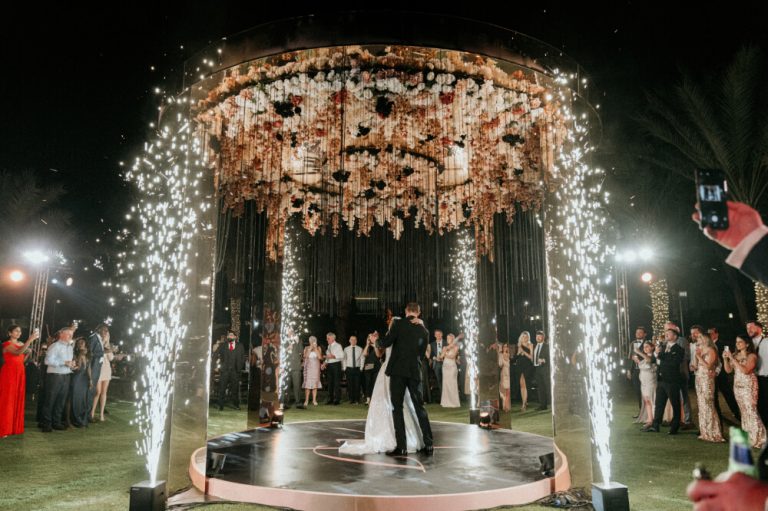
Reception: entrance, speeches sequenced against the service timeline, dinner service, cake, first dance, entertainment segments, party.
Close: guest transport departure, vendor strike, personal items and gifts collected by a named person, venue handover.
Every line above needs a time and an owner. The version distributed to suppliers is the operational one; the version given to the wedding party is a simplified extract.
How the Timeline Changes for Indian, Destination and Multi-Day Weddings
The twelve-month framework holds, but three formats extend it.
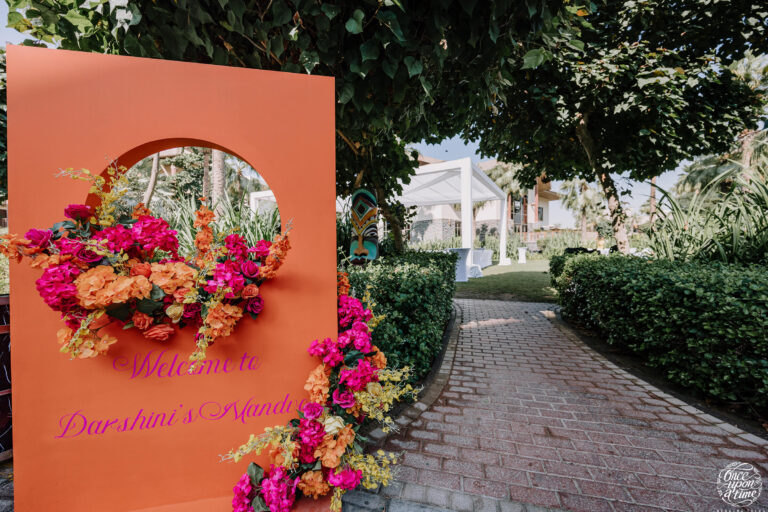
Indian weddings. Multiple functions — mehndi, sangeet, haldi, nikah or pheras, reception — mean multiple design schemes, multiple catering briefs and multiple venue contracts, sometimes across different properties. Add two to three months to the front of the timeline, and treat each function as its own production with its own run sheet.
Destination weddings. When most guests fly in, the wedding becomes a multi-day hospitality programme: airport transfers, welcome dinner, activity day, main event, farewell brunch. Invitations move to fourteen to sixteen weeks and room blocks open earlier.
Multi-day celebrations generally. The binding constraint is guest stamina and supplier crew rotation, not creative capacity. Sequence high-energy functions with recovery time between them.
Whichever format applies, the earlier the planner is appointed, the more of the market is still available to you. If you want to discuss a specific date and format, get in touch with our team — or start with why couples work with a luxury wedding planner in Dubai.
Frequently Asked Questions
How far in advance should I book a wedding planner in Dubai?
Ten to twelve months before the wedding date for a full-scale celebration. Appointing a planner before venue and vendor contracts are signed is what preserves negotiating leverage. Weddings under 80 guests can be planned comfortably in six months.
What is the best month to get married in Dubai?
October to April offers the most comfortable outdoor conditions, with November to February the most in demand and the most expensive. Late April, May and late September are shoulder months with better rates and wider venue availability.
When should Dubai wedding invitations be sent?
Ten to twelve weeks before the date for a predominantly local guest list, and fourteen to sixteen weeks where a significant proportion of guests are travelling internationally. Set the RSVP deadline four weeks out.
How long does an Indian wedding in Dubai take to plan?
Typically twelve to fifteen months. Each function carries its own design scheme, catering brief and often its own venue contract, so the planning load scales with the number of ceremonies rather than the guest count.
Do I need a wedding planner if the venue provides a coordinator?
A venue coordinator manages the venue’s obligations. A wedding planner manages the entire supplier ecosystem, the budget, the design direction and the run sheet across every vendor. The two roles are complementary, not interchangeable.